THEMATIC READER
Additional Topics
This reader combines 23 shorter encyclopedia entries into one continuous, searchable document. Each original title has a direct link and downloadable source text.
Adam Penrod
Adam Penrod has been an active Noachide for ten years. He has a B.A. in Philosophy from the University of North Texas and has learned at the feet of our beloved teachers the Rabbis in Jerusalem. In College Mr. Penrod established the student organization “AMeT” (truth) and appeared on several world religion panels. Mr. Penrod is an experienced educator teaching both adult and young adult Torah classes.
His first exposure to Yeshiva learning was at the Diaspora Yeshiva on Mt Zion where he learned with Rabbi Sprecher. Mr. Penrod specifically sought out learning opportunities that would enable him to better understand the Noachide Laws, and hoped that he could make available to other Noachides similar learning opportunities. As a result of Mr Penrod’s study at the Diaspora Yeshiva Noachide awareness was raised, including awareness of a need for learning opportunities.
It was at Yeshiva Ohr Somayach that Mr Penrod pursued conversion studies.
Although he never completed the conversion process he was able to learn about Judaism and the Noachide Laws from a unique perspective. Over the course of the last eight years Mr Penrod has made four separate trips to Israel. The most recent trip culminating in his taking the pledge to be a member of the High Council of B’nei Noah, as that body’s Secretary.
Over the years Mr Penrod has made friendships with Rabbis, Jews, and Noachides in Israel and the United States and he has studied with them over the last ten years. It is with their continued wisdom that Mr Penrod feels, “I am able to explore the depths of Torah.”
Some of the current projects Mr Penrod is involved in are: a Noachide Siddur, a Children’s book written by his mother Mollie Penrod with artwork provided by Mr Penrod, A Noachide Comic Book with art and story by Mr Penrod, as well as several other projects ranging from teaching classes at home in Tennessee to outreach work to Noachides in India.
Against Zionism
- Theodor Herzl, the Founder of Zionism
- Historical Progression of Zionism
Rabbis before World War I
- Maimonides
- Rabbi Yitzchok Aramah
- Rabbi Betzalel Lowy
- Rabbi Avraham Galanti
- Rabbi Bechaye
- Rabbi Aryeh Leib Alter
- Rabbi Nachman of Breslov
- Rabbi Yechezkel Shraga Halberstam
- Rabbi Tzadok Hakohen
- Rabbi Yehoshua Leib Diskin
- Rabbi Samson Raphael Hirsch
- Rabbi Yosef Chaim Sonnenfeld
- Rabbi Yeoshea Dzikover
Rabbis before World War II
- Rabbi David Friedman
- Rabbi Yissachar Dov
- Rabbi Meir Simcha
- Rabbi Yosef Rozen |
- Rabbi Avraham Freund
- Rabbi Elchonon Wasserman
- Rabbi Chaim Soloveichik
- Rabbi Yisrael Meir Hakohen
- Rabbi Sholem Dov Ber Schneersohn
- Rabbi Shaul Brach
- Rabbi Chaim Oizer Grodzinski
- Rabbi Chaim Elazar Shapiro
Rabbis after World War II
- Rebbe Joel Teitelbaum
- Rabbi Yosef Tzvi Dushinsky
- Rabbi Yitzchock Zev Soloveitchik
- Rabbi Avraham Yeshayau Karelitz
- Rabbi Yitzchok Dov Koppelman
- Rabbi Michael Dov Weissmandl
- Rabbi Aharon Kotler
- Rabbi Mordechai Gifter
- Rabbi Elya Svei
- Rabbi Baruch Kaplan
- Rabbi Amram Blau
- Rabbi Avigdor Miller
- Rabbi Yitchok Hutner
Joint Statements Issued by Rabbis in the USA, Canada and Europe Opposing Zionism
Aharon Soloveitchik
Rabbi Aharon Soloveitchik, "Criminal Penalties under the Noachide Code", Rosh HaYeshiva, Rabbi Isaac Elchanan Theological Seminary (RIETS), Yeshiva University
Alan Brill
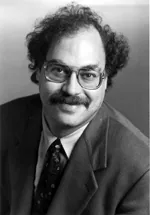
Rabbi Dr. Alan Brill teaches at Yeshiva University and Yeshivat Chovevei Torah and is also the Founder and Director of Kavvanah: Center for Jewish Thought. He is the author of a forthcoming monograph on Orthodox approaches to other religions.
Asher ben Jehiel
Asher ben Jehiel (Hebrew, אשר בן יחיאל, or Asher ben Yechiel, ) (1250 or 1259-1328) was an eminent rabbi and Talmudist best known for his abstract of Talmudic law. He is often referred to as Rabbenu Asher, “our Rabbi Asher” or by the Hebrew acronym for this title, the ROSH (Hebrew, רא"ש, literally "Head").
Biography
The Rosh was born in western Germany and died in Toledo, Spain. His family was prominent for learning and piety, his father Jehiel was a Talmudist, and one of his ancestors was Rabbi Eliezer ben Nathan (the RaABaN). Asher had eight sons, the most prominent of whom were Judah and Jacob, author of the Arba'ah Turim code of Jewish law. His primary teacher was the Tosafist Rabbi Meir of Rothenburg, then in Worms. In addition to his studies, ROSH worked in money lending, and according to his own statement, was independently wealthy.
In 1286, Emperor Rudolf I had instituted a new persecution of the Jews, and Rabbi Meir left Germany, but was captured and imprisoned. The ROSH raised a ransom for his release, but Rabbi Meir refused it, for fear of encouraging the imprisonment of other rabbis. Therafter Rosh assumed Rabbi Meir's position in Worms. He was, however, forced to emigrate (in all likelihood, a victim of blackmail by the government, aimed at acquiring his fortune). After leaving Germany, he first settled in southern France, and then in Toledo, Spain, where he became rabbi on the recommendation of Rabbi Solomon ben Aderet (RaShBA). Rabbenu Asher's son Judah testified to the fact that he died in poverty.
Rabbenu Asher possessed "methodical and systematic" Talmudic knowledge, and was distinguished for his ability to adumbrate long Talmudic discussions. ROSH, influenced by his teacher Rabbi Meir, was averse to lenient decisions in halakha, even when theoretically justified. (Several of his rulings which may appear lenient, are actually strictures: His decision against praying more than three times a day is, in fact, limiting. Similarly, his assertion that the phrase halacha le-Moshe me-Sinai -"an oral law revealed to Moses on Sinai" - does not always bear a literal meaning but often signifies a universally adopted custom, is not usually taken as a liberal interpretation.) The ROSH was, however, known for his independent legal reasoning: "We must not be guided in our decisions by the admiration of great men, and in the event of a law not being clearly stated in the Talmud, we are not bound to accept it, even if it be based on the works of the Geonim." (For instance, ROSH ruled that the liturgy of the Geonim, was not in violation of the Talmudic rule against change in the prayers.)
Rabbenu Asher was opposed to the study of secular knowledge, especially philosophy. He held that philosophy is based on critical research, whereas religion is based on tradition and the two are thus "incapable of harmonization". He said that "none that go under her may return" - in fact, he thanked God for having saved him from its influence, and boasted of possessing no knowledge outside the Torah. He led the anti-Maimonists in Spain; he also attempted to issue a decree against the study of non-Jewish learning. One effect of this attitude was to limit his influence on secular Spanish Jewry. At the same time, within Rabbinic circles, "he transplanted the strict and narrow Talmudic spirit from Germany to Spain", and this, in some measure, turned Spanish Jews from secular research to the study of the Talmud.
Works
Rabbenu Asher’s best known work is his abstract of Talmudic law. This work specifies the final, practical Jewish law, leaving out the intermediate discussion and concisely stating the final decision. It omits areas of law limited to Eretz Yisrael (such as agricultural and sacrificial laws) as well as the aggadic portions of the Talmud. Asher’s son Jacob compiled a list of the decisions found in the work, under the title Piskei Ha-ROSH (decisions of the ROSH). Commentaries on his Halachot were written by a number of later Talmudists. In yeshivot, this work is studied as a regular part of the daily talmud study.
This work resembles the “Hilchot” of the Rif (Rabbi Isaac Alfasi) - also an adumbration - but differs in quoting later authorities: Maimonides, the Tosafists and Alfasi himself. Rabbenu Asher's work superseded Alfasi's within a short time and has been printed with almost every edition of the Talmud since its publication. This work was so important in Jewish law that Yosef Karo included the ROSH together with Maimonides and Isaac Alfasi as one of the three major poskim (decisors) considered in determining the final ruling in his Shulkhan Arukh.
Rabbi Asher also authored:
- Orchot Chaim, an essay on ethics, written for his sons. It begins with the comment, “Distance yourself from haughtiness, with the essence of distancing.” Orchot Chaim is today an important text in mussar study.
- A commentary on Zeraim (the first order of the Mishnah) - with the exception of Tractate Berachot.
- A commentary on Tohorot (the sixth order of the Mishnah).
- Tosafot like glosses on several Talmudic topics.
- A volume of responsa; see History of Responsa: Fourteenth century.
External links
- References
- Asher ben Jehiel, jewishencyclopedia.com
- Rabbi Asher ben Yechiel - The “Rosh”, ou.org
- Resources
- Orchot Chaim Hebrew Fulltext, daat.ac.il
Breslov Teachings on Noahides Compared
Here is a correspondence between Jewish Law and Noahide Law as implied by the teachings of Rabbi Nachman. For comparison purposes the generally accepted views of Maimonides and Rabbi Benamozegh are provided:
| Jewish Law | Noahide Law | ||
| Maimonides | Rabbi Benamozegh | Rabbi Nachman | |
| 10 Commandments | - | 7 Laws | 7 Laws |
| 613 Commandments | 7 Laws | many more | many more |
| Mitzvah | 7 Laws, or voluntary keep one of 613 | 7 Laws, voluntary keep one of 613, or Logically derived laws | National Law if law was made and observed for correct motive |
| No separate religious & civil legal system | Two legal systems: Religious Law & King's Law | Two legal systems: Religious Law & Secular Law | One legal system |
| Rabbinical Tekanos & Gezeros | Voluntary & Individual | Existing Religions | National Law |
| Rabbis | - | - | National Assemblies |
| Messiah | - | - | National King |
| Geula (Redemption) | Messianic World Redemption | Messianic World Redemption | National Redemption preceding World Redemption |
| Mission | To support the Jews | Jews & Torah exist to enable observance of Seven Laws by the nations | Each Nation (Jews being one of them) has its own equally important but different purpose |
| Teaching Jewish Law | Forbidden for Jew to teach, Voluntary for Noahide to learn | Ok if for correct motive | Forbidden to study another National Law |
| Learning non-Jewish Law | - | desirable to learn read texts of other faiths | Forbidden to study another National Law |
| converts | Open to all non-Jews | Discouraged because existing religions should be reformed | Discouraged because each nation has a different divine essense, and specific purpose to fulfill. Conversion also applies from nation to nation. |
ChaBaD
The name Chabad comes from the array of 10 Sephroth, (2. Chochmah, 3. Binah, -Daat) refers to the three intellectual sephiros (Divine Emanations)
The name ChaBaD refers to three intellectual Sefirot Divine Emanations which comes from 10 Sefirot which form the Tree of Life.
Cha - (02. Chochmah (Wisdom; חכמה) Ba - (03. Binah (Understanding; בינה) D - Da'at (Knowledge; דעת) (non numbered Sefiroth)
The 10 names of the Sefirot are:
01. Kether (Crown; כתר) 02. Chochmah (Wisdom; חכמה) 03. Binah (Understanding; בינה) 04. Chesed (Mercy; חסד) 05. Gevurah (Severity; גבורה) 06. Tiphareth (Redeemer; תיפארת) 07. Netzach (Victory; נצח) 08. Hod (Majesty; הוד) 09. Yesod (Foundation; יסוד) 10. Malkhuth (Kingdom; מלכות)
Occasionally another is enumerated: Da'at (Knowledge; דעת)
David Novak
David Novak is a scholar of Jewish philosophy, law (Halakha) and ethics. He has rabbinical ordination and has trained with Catholic moral theologians. Novak taught at the University of Virginia and subsequently at the University of Toronto.
Novak has contributed to Jewish ethics by advocating a Jewish social ethics drawn from both the natural law tradition and Halakha. To this end, he interprets the rabbinic approach to Noahide laws as a useful grounding for cross-cultural moral reasoning. He also writes extensively on Jewish-Christian relations. His expertise includes Maimonides, John Courtney Murray, and Paul Tillich.
His specific normative claims in Jewish ethics include a curious mix of what may be characterized as liberal and right-wing positions. Novak had been affiliated with the liberal-leaning Conservative movement in Judaism and then shifted to the "Traditional Judaism" offshoot.
Selected works
- Law and Theology in Judaism (volumes I and II) (Vol. 1 Foreword by Louis Finkelstein. New York : Ktav Pub. House, [1974])
- Suicide and morality : the theories of Plato, Aquinas, and Kant and their relevance for suicidology. New York : Scholars Studies Press, c1975
- The image of the non-Jew in Judaism: an historical and constructive study of the Noahide Laws / David Novak. New York : E. Mellen Press, c1983.
- Halakhah in a theological dimension. Chico, Calif. : Scholars Press, c1985.
- Jewish-Christian dialogue: a Jewish justification. New York ; Oxford : Oxford University Press, 1989.
- The theology of Nahmanides systematically presented. Atlanta, Ga. : Scholars Press, c1992.
- Jewish social ethics. New York : Oxford University Press, 1992.
- The election of Israel : the idea of the chosen people. Cambridge [England] ; New York, NY, USA : Cambridge University Press, 1995.
- Natural law in Judaism / David Novak. Cambridge ; New York : Cambridge University Press, 1998.
- Covenantal rights : a study in Jewish political theory / David Novak. Princeton, N.J. : Princeton University Press, c2000.
- DABRU EMET: A JEWISH STATEMENT ON CHRISTIANS AND CHRISTIANITY. A statement by four authors. http://www.icjs.org/what/njsp/dabruemet.html.
Articles
- Leo Strauss and Judaism : Jerusalem and Athens critically revisited / edited by David Novak, Lanham, MD : Rowman & Littlefield, 1996.
- Philosophy and the Possibility of Revelation: A Theological Response to the Challenge of Leo Strauss by David Novak.
Eliezer b. Joel ha-Levi
Eliezer ben Yoel HaLevi (d. 1225) was a noted rabbi and Talmudic scholar. He was a grandson of Raavan and authored Sefer Avi Ezri which is more commonly known by its author's acronym as Sefer Ra'avyah. He had a significant influence on the Rosh. As a rishon, he was prominent amongst the middle-aged Tosafists.
Ezekiel Landau
Rabbi Ezekiel ben Judah Landau was a Polish rabbi; born in Opatow Oct. 8, 1713 (see preface to "Noda' bi-Yehudah," 2d collection of his son Jakobḳe); died at Prague April 29, 1793. He received his Talmudical education at Vladimir and Brody. From 1734 to 1745 he acted as first dayyan of Brody; in the latter year he became rabbi of Jampol.
Landau's tactful attitude in the affair of the Eybeschütz amulets won for him general approbation. In a letter addressed to the rabbis who consulted him on the subject he endeavored to persuade them to establish peace between the disputants, and insinuatedthat the amulets might have been falsified, thus opening to the accused rabbi an honorable way of exculpating himself. The letter attracted the attention of the leaders of the community of Prague; in 1755 Landau was called to the rabbinate there; and he continued to hold the position till his death.
Combining vast erudition with great amenity of character, his incumbency proved very beneficial to the community. Respected by the authorities, who recognized the ardent patriotism displayed by him on more than one occasion, he was often consulted on Jewish religious matters. A letter addressed to Landau by the government, asking for his opinion on the question whether an oath pronounced by one holding a discarded scroll of the Law is binding, is inserted in the "Noda' bi-Yehudah" (ii. 65).
While very strict in ritual matters, Landau, for the sake of peace, sometimes sanctioned things which he did not approve. Thus, notwithstanding his previous prohibition, he permitted Löb Honigsberg to continue the construction of a building on semi-holidays, the latter having pleaded urgency (ib. ii. 29). Although a lover of Haskalah, as may be seen from his approbation to the "Yen Lebanon" of Wessely, Landau saw great danger for Judaism in the invasion of German ideas resulting from the German translation of the Bible by Mendelssohn ("Ẓelaḥ" to Ber. 28b).
Though a student of the Cabala and well versed in mystic literature, Landau was a decided adversary of Ḥasidism. He thunders against the recitation of as done by the Ḥasidim, and applies to them the words of Hos. xiv. 10, substituting therein "Ḥasidim" for "Posh'im."
Landau witnessed the siege of Prague in 1757, and when urged to leave the city he decided to cast his lot with the rest of the people. Some years later, in a controversy between the rabbis of Frankfort-on-the-Main and others concerning a form of divorce to be granted to a man from Cleves, Landau took issue against the former; and this so enraged them that in 1769 it was decided that neither Landau nor any of his sons should ever be elected to the rabbinate of Frankfort. In the conflagration of 1773 Landau lost most of his manuscripts. He was thereupon induced to begin the publication of those of his works which the flames had spared, and to add to them his new productions.
Landau's published works are: "Noda' bi-Yehudah" (1776; 2d ed. 1811), responsa; "Derush Hesped," a funeral oration on the death of Maria Theresa (Prague, 1781, in German); "Shebaḥ we-Hoda'ah," a derashah (1790); "Mar'eh Yeḥezḳel," notes to the Talmud, published by his son Samuel Landau in the Talmud edition of 12 vols., 1830; "Ẓiyyun le Nefesh Ḥayyah," novellæ on different Talmudic treatises, viz., Pesaḥim (1784), Berakot (1791), Beẓah (1799), the three republished together in 1824; "Dagul me-Rebabah" (1794), notes on the four ritual codices; "Ahabaṭ Ẓiyyon" (1827), addresses and sermons; "Doresh le-Ẓiyyon" (1827), Talmudic discussion.
Though a Talmudic scholar and a believer in the Kabbalah, yet Landau was broad-minded and not opposed to secular knowledge. He, however, objected to that culture which came from Berlin. He therefore opposed Mendelssohn's translation of the Pentateuch, and the study of the sciences and of languages advocated by Wessely. Landau was highly esteemed not only by his coreligionists, but also by others; and he stood high in favor in government circles.
Bibliography:
- E. Landau, Noda' bi-Yehudah, Prague, 1811;
- Fuenn, Keneset Yisrael, p. 515, Warsaw, 1886;
- Pascheles, Jüdischer Volkskalender, p. 85, Prague, 1884;
- Grätz, Gesch. xi.;
- Rabbinowitz, Dibre Yeme Yisrael, viii., Warsaw, 1899;
- Horovitz, Frankfurter Rabbiner, iii. 99, Frankfort-on-the-Main, 1885;
- Zedner, Cat. Hebr. Books Brit. Mus. p. 422.S. S. B. Fr.
Henry Pereira Mendes
American rabbi; son of Abraham Pereira Mendes; born in Birmingham, England, April 13, 1852. He was educated at Northwick College (rabbinics), at University College (London), and at the University of the City of New York, taking the degree of M.D. He became minister of the Manchester (England) Sephardic congregation in 1874, and in 1877 was called to the Congregation Shearith Israel of New York, of which he is still (1904) the minister. In 1881 he was one of the founders of the New York Board of Ministers, and acted as its secretary from its foundation up to 1901, when he became president. He joined Dr. Morais in helping to establish the Jewish Theological Seminary in 1886, of which he became secretary of the advisory board and professor of history. On the death of Dr. Morais he became acting president of the faculty until the appointment of Dr. S. Schechter. In 1884, the centennial of the birth of Sir Moses Montefiore, he moved his congregation to convene the leadingJews of New York to mark the event by some practical work: the outcome was the Montefiore Home for Chronic Invalids, established in the same year. He was made vice-president of the Gild for Crippled Children in 1896, and in 1901 established the Jewish branch of that gild.
He promoted the formation of the Union of Orthodox Congregations of the United States and Canada (1897) and was subsequently elected its president. Mendes was one of the founders of the Young Women's Hebrew Association of New York (1902), of whose advisory board he is chairman.
In conjunction with his brother Frederick de Sola Mendes, and others, he was one of the founders of "The American Hebrew" (1879), to whose columns, as to those of the general press, he is a frequent contributor. He is the author of "Union Primer and Reading Book" (1882); "Jewish Hisṭory Ethically Presented" (1895); "Looking Ahead," a plea for justice to the Jew (1900); "The Jewish Religion Ethically Presented" (1904). Among his other writings are: "In Old Egypt," stories about, but not from, the Bible; "Esther"; "Judas Maccabæus"; and many essays in periodical publications.J. F. H.
Mendes Family
One of the oldest Sephardic families. It continued in Spain and in Spanish possessions long after 1492, the year of the general expulsion. Many members of the family and its connections undoubtedly succeeded that year in joining the Jews ofAquitaine. Others drifted to Holland, Italy, Turkey, etc. The French or Aquitaine branch settled chiefly in Bordeaux, Bayonne, and Came. It inter-married with such old families as Pereira, Da Costa, Gomez, Vaez, Osorio, Sola, Sespedes, Capote, Quiros, Henriques, Soares, Casado, Morro, Bonito, Fonsequa, Nunes, Corcho, Netto, etc. Among Bayonne notables of this family may be mentioned Edouard Mendes (member of the municipal council, president of the tribunal of commerce, chevalier of the Legion of Honor), Auguste Mendes ("inspecteur des postes"), and Elysée Mendes (member of the tribunal of commerce and of municipal council). The earliest Mendes tombstone now in existence in Bayonne is that of Rodrigues Mendes (1637).
The Holland branch produced some notable writers, such as David, son of Atalyah Franco Mendes (author of Gemul 'Atalyah, Ḥanukkat ha-Bayit, Peri 'Eẓ Ḥayyim, Teshu'ot Yisrael), Samuel Rodrigues Mendes, and Samuel da Silva Mendes (authors or editors of editions of the Sephardic ritual on which the modern editions of David Levi, Meldola de Sola, Leeser, and Gaster are based).
The West-Indian or American branch springs from David Pereira Mendes, who fled from Spain to Bayonne and who arrived in Jamaica in 1786. He died the same year, leaving one son, Samuel. This son had twelve children, from one of whom, Isaac, were descended Joseph and Abraham. Joseph was the father of Isaac Philipe and four daughters. Abraham was the father of Frederick de Sola Mendes and Henry Pereira Mendes.
View on Noahides
Main article Judaism and Other Religions
Rabbi Henry Pereira Mendes (1852-1937) served as rabbi of New York’s traditional Spanish and Portuguese Synagogue, in which capacity he attended the 1893 Parliament of Religions in Chicago. He was the first president of the Union of Orthodox Jewish Congregations of America, and the first professor of homiletics at Rabbi Isaac Elhanan Theological Seminary in New York. He wrote:
There is a legend that, when Adam and Eve were turned out of Eden or earthy paradise, an angel smashed the gates, and the fragments flying all over the earth are the precious stones. We can carry the legend further. The precious stones were picked up by the various religions and philosophers of the world. Each claimed and claims that its own fragment alone reflects the light of heaven, forgetting the setting and incrustations which time has added. Patience my brother. In God's own time we shall, all of us, fit our fragments together and reconstruct the gates of paradise. There will be an era of reconciliation of all living faiths and systems, the era of all being in at-one-ment, or atonement, with God. Through the gates shall all people pass to the foot of God's throne.[21]
Here we have an Orthodox thinker who clearly affirms a common core of all religions, which over time became encrusted and thereby lead to devolution of various faiths. In the modern age we now seek a collective activity of all humanity’s seeking to return to the original core. The Biblical vision of becoming a light unto the nations is as part of a joint effort to worship together. The eventual goal is a messianic restoration to Eden.
Israel Chait
RABBI ISRAEL CHAIT is Rosh Yeshiva of Yeshiva B’Nai Torah in Far Rockaway, New York, and has collaborated closely with the Noahide Movement.
Israel Lipschutz
View on Noahides
Main article Judaism and Other Religions
Rabbi Israel Lipschutz (1782-1860) from the port city of Danzig, offers a surprising universalistic sentiment in his Mishnah commentary.
R. Elazar ben Azaryah said, "If there is no Torah there is no civilization [derech eretz: lit. way of the land.]." The word "Torah" here cannot be meant literally, since there are many ignorant people who have not learned it, and many pious among the gentiles who do not keep the Torah and yet are ethical and follow the “way of the land.” Rather, the correct interpretation seems to me to be that every people has its own Divine religion, which comprises three foundational principles, (1) belief in a revealed Torah, (2) belief in reward and punishment, and (3) belief in an afterlife. They only disagree on the interpretation of these principles. These three principles are what are called here "Torah."[22]
Lipschutz's offers a vision of tolerance based on a generic sense of revelation, reward, and afterlife found in all religions. Rather than approaching religions as an other, he senses a common core based on morality. If one wanted to develop an approach to non-Abrahamic faiths, then his general definitions offer a useful starting point. For him, enlightenment, karma, and reincarnation could be considered valued forms of Torah for gentiles.
J. David Bleich
Rabbi Dr. J. (Judah) David Bleich is an authority on Jewish law and ethics and bioethics. He is a professor of Talmud (Rosh Yeshiva) at Rabbi Isaac Elchanan Theological Seminary, an affiliate of Yeshiva University, as well as head of its postgraduate institute for the study of Talmudic jurisprudence and family law. (His official position is called the "Herbert and Florence Tenzer Chair in Jewish Law and Ethics.")
Academic Credentials
Rabbi Bleich is a Woodrow Wilson Fellow, a postdoctoral fellow at the Hastings Center, fellow of the Academy of Jewish Philosophy, and a member of the Governor’s Commission on Life and the Law.
Degree: B.A., Brooklyn City University of New York; M.A., Columbia University; Ph.D., New York University; Ordination, Yeshiva Torah VoDaat, New York; Ordination Yadin Yadin, Rabbi Moshe Feinstein and Rabbi Mendel Zaks.
Publications
Rabbi Bleich is the author of Jewish Bioethics (a collection of essays, which he coedited with Fred Rosner); With Perfect Faith: Foundations of Jewish Belief; Contemporary Halakhic Problems (five volumes); Time of Death in Jewish Law; and Judaism and Healing. He has written extensively on the applications of Jewish law to contemporary social issues and on the interface of Jewish law and the American legal system.
The Yorkville Synagogue
Rabbi Bleich has been the rabbi (Jewish spiritual leader) of the Yorkville Synagogue, located in Manhattan on 352 E 78 St. and 1st Ave., for many years. He teaches two hour-long Talmud classes on Saturday (Shabbos), before the morning service (Shacharit) and afternoon service (Mincha).
Once every two or three weeks, Rabbi Bleich teaches an hour-long class on a Jewish halakhic or philosophical issue, in a program called "Kiddush, Cholent and Learning." The topic usually is related to the subject matter of the weekly Torah portion. (For example, Rabbi Bleich discussed the seven Noahide Laws on the Shabbat in 2005 when Genesis chapter 34, the story of Dinah's abduction and rescue, was read. Medieval commentators have discussed whether the actions of Shimon and Levi, and the people of Shekhem, were consistent with the Noahide Laws.) Rabbi Bleich distributes photocopied source sheets, including excerpts from the Talmud, medieval commentators on the Bible and Talmud, medieval and modern responsa, and some modern English-language scientists, philosophers, and news reporters. These interdisciplinary Torah lectures, sweeping across a wide historical range of ideas, provide a rare opportunity for Torah students and reflect the brilliance of Rabbi Bleich's mind.
In the upkeep of the synagogue (and his other endeavors), Rabbi Bleich is complemented by his wife, Dr. Judy Bleich, who is a professor of Jewish history at Touro College in Manhattan.
External links
Maharam MiRutenberg
Rav Meir of Rothenburg was born in Worms, Germany in 1220. He studied in the French Tosafist schools under Rav Yechiel of Paris and Rav Shmuel of Evreux. He served as Rabbi of Worms and Rothenburg, and wrote many halachic responsa while in those positions. In addition, he wrote commentaries to Zera'im and Taharot, and authored the Tosafot that appear in our editions of tractate Yoma. He wrote several smaller works, and his responsa are frequently cited by Or Zarua and Mordechai. His students included Mordechai and Rosh.
Manis Friedman
Rabbi Manis Friedman is a renowned author, counselor, lecturer and philosopher.
Rabbi Friedman was born in Prague, Czechoslovakia in 1946 and immigrated with his family to the United States in 1950. He received his rabbinic ordination at the Rabbinical College of Canada in 1969.
Rabbi Manis Friedman uses ancient wisdom and modern wit as he captivates audiences around the country and around the world. He hosts his own critically acclaimed cable television series, Torah Forum with Manis Friedman, syndicated throughout North America. Over 150,000 copies of his provocative yet entertaining tapes, both audio and video have been sold.
Rabbi Friedman's first book, "Doesn't Anyone Blush Anymore?", published by Harper San Francisco in 1990, was widely praised by the media. It is currently in its fourth printing. Following the publication of the book, he was featured internationally in over 200 print articles, and interviewed on more than 50 television and radio talk shows. He has appeared on CNN, A&E Reviews, PBS, and BBC Worldwide, and has been the subject of articles in the New York Times, Rolling Stone, Seventeen, Guideposts, Insight, Publisher's Weekly and others.
Rabbi Friedman is a noted Biblical scholar, recognized for his sagacious grasp of Jewish mysticism. In 1971, he founded Bais Chana Institute of Jewish Studies in Minnesota, the world's first yeshiva exclusively for women, where he continues to serve as dean. From 1984-1990 he served as simultaneous translator for the Lubavitcher Rebbe's televised talks.
Rabbi Friedman is a professionally ranked member of the National Speakers Association. His speaking tours take him to every part of the U.S.A. as well as Israel, England, The Netherlands, South Africa, Australia, Brazil, Venezuela, Peru, Canada, and Hong Kong.
External links
Michael Dallen
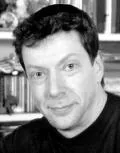
Dr. Michael Dallen, a writer and attorney, started the First Covenant Foundation (originally, the Rainbow Covenant Foundation). Working with Jack E. Saunders, Rabbi Michael Katz and others, he is its first trustee and director. A 20-year member of the National Council of Americans for a Safe Israel, he began treating Israel's Torah Covenant, the Covenant of Sinai, completely seriously only after learning of the Universal Covenant. He wrote - with the help of many others - The Rainbow Covenant.
External Links
- 1stCovenant.org & RainbowCovenant.org: The First Covenant Foundation Michael Dallen, a longtime writer and attorney, Jack E. Saunders, who began his professional career as a Baptist pastor, and Rabbi Michael Katz provide a wide variety of information on the Noahide Covenant, which they also call the Rainbow Covenant or Universal Covenant. Michael Dallen's book can be found here
Michael Katz
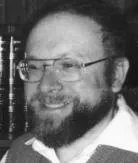
Rabbi Dr. Michael Katz has served as a rabbinic consultant and adviser to Noahides since 1989. He has been a First Covenant Foundation trustee and director since the foundation's beginning. Rabbi Katz worked on The Rainbow Covenant as one of the first scholars who reviewed and worked on it before publication. He wrote its foreword. He began his professional career in South Africa. A writer, lecturer, businessman and Torah teacher, Rabbi Katz lives in South Florida with his wife, Toby (daughter of the late Rabbi Nachman Bulman, of blessed memory), and their three children, Shai, Naomi and Shifra.
External Links
- 1stCovenant.org & RainbowCovenant.org: The First Covenant Foundation Michael Dallen, a longtime writer and attorney, Jack E. Saunders, who began his professional career as a Baptist pastor, and Rabbi Michael Katz provide a wide variety of information on the Noahide Covenant, which they also call the Rainbow Covenant or Universal Covenant.
Miriam Ben Yaacov
Miriam Ben Yaacov has been writing and teaching Torah for many years.
Miriam was born to a Southern Baptist family in Washington state. Her father was in the US Army until 1965, when he went into the ministry and began to pastor in churches. So the family lived in many places as she grew up.
Within the church Miriam taught "Old Testament," including the Prophets' promises to Israel for ingathering to the Land and Redemption for the world.
Having lived in Germany for so many of her formative years, she was particularly influenced by the gravity of the Holocaust. In 1985 she became involved in the Soviet Jewry movement, saying in letters over and over: "Those of us born in a free country are obligated to those who are not!"
Miriam converted to Orthodox Judaism in 1988. In 1990 her husband was asked to go with Rabbi Meir Kahane to Fort Worth, where he spoke at the first B'nai Noach conference, sponsored by Vendyl Jones Research Institutes.
In July of 1990, Miriam moved to Israel with her husband and two daughters. During the thirteen years there, they lived in various communities in Judea. Her older daughter, Amira, became a Hebrew teacher and the younger, Yael, served in the Israeli army. Miriam studied Torah at several yeshivot, and with various teachers, in Jerusalem and Safed. She calls Avraham Sutton her primary teacher and mentor.
In the year 2001 she began traveling in Asia and the US on what she calls her spiritual journey. Meeting people of other cultures, she came to see the Noachide Covenant in a whole new way. Encountering Israelis traveling after the army, she came to see the journey of the secular Jew, searching for his Jewish identity. The idea of ushering in the Redemption took on a new dimension.
Miriam is a practitioner of an energy healing method called Shefa (a Hebrew word meaning "abundance"), which is becoming increasingly popular in Israel. Shefa is similar to the more commonly known method of Reiki, however, it is completely based on Torah methods. She sees Shefa as a tool to bring the world closer to Redemption, through prayer and repentance necessary for complete healing.
Moses ben Jacob of Coucy
Rabbi Moses ben Jacob of Coucy was a French Tosafist and authority on Halakha (Jewish law). He lived in the first half of the thirteenth century, and was a descendant of a family of distinguished scholars. He is best known as author of one of the earliest codifications of Halakha, the "Sefer Mitzvot Gadol" (Hebrew: Large Book of the Commandments; abbreviated "SeMaG"). He studied under Judah ben Samuel of Regensburg (Yehudah HeHasid).
"SeMaG" deals with the 365 negative commandments and the 248 positive commandments, separately discussing each of them according to the Talmud and the decisions of the Rabbis. Rabbi Moses' arrangement and presentation are heavily influenced by Maimonides' discussion of the commandments in the Sefer Hamitzvot and by his codification of the Halakha in the Mishneh Torah. However unlike Maimonides, Rabbi Moses presents lengthy discussions of the different interpretations and legal opinions. He also makes extensive use of other codes, and particularly of the commentaries of Rashi and the Tosafot, usually favouring these Ashkenazi traditions over Maimonides. The "SeMaG" also contains much non-legal, moralistic teaching. Commentaries on SeMaG include Tosefe Semag by Elijah Mizrachi (Re'em) and Ammude Shlomo by Solomon Luria (Maharshal).
In 1240 Moses was one of the four rabbis who were required to defend the Talmud, in a public disputation in Paris, and it is likely that the need for a work like the "SeMaG" was driven by the decrees against the Talmud which had been promulgated in France, and had led to the confiscation and burning of all Talmud manuscripts in 1242.
References
- Moses Ben Jacob of Coucy (SeMaG), jewishencyclopedia.com
- Sefer Mitzvot Gadol, Prof. Eliezer Segal
- Semag, bnainoach.com
My Support
This purpose of the Encyclopedia is to create a resource for the greater Bnei Noach community and those interested in the Bnei Noach movement from rabbinical sources. It is intended to contain the sum total of everything worthwhile to know about the Bnei Noach movement, its theology, history and resources. What it is and what is is not.
This is an educational project done in cooperation with the Special Court for Matters of Bnei Noah of the Sanhedrin Initiative. The articles, information, and links provided on this site do not represent official policies, procedures, or opinions the Sanhedrin Initiative or any of its committees, courts or organizations. The information on this site have come from a variety of sources, including speeches, articles, tracts, and other presentations, and they have been composed over a period of time, and many are of historic interest, Religion interest, and human affairs interest. Also, writer's inclusion on this site does not imply his full agreement with all of the articles. Each writer is responsible only for his own stated views. Many of the articles on this web site have been included only for the viewers use in the comparison of differing views and beliefs.
Online Contributions
To make a donation using one of the credit cards displayed, press the secure link below. You will be presented with a PayPal home page. Select "Send Money" and enter what amount you wish to contribute. Indicate the recipient as "donatevisa@wikinoah.org". You may click the button for the non paypal account and fill out the credit card details without creating an account.
| https://www.paypal.com donatevisa@wikinoah.org |
Nahum Rakover
Nahum Rakover is a former Deputy Attorney General in Israel, responsible for bringing modern Israeli law into conversation with traditional rabbinic law (Halakha).
Rakover is a prolific author on Jewish law and associated with the Mishpat Ivri movement. He has compiled several bibliographies on the use of Jewish law in Israeli judicial opinions, legislative deliberations, and scholarship.
Nathaniel ibn Fayumi
View on Noahides
Main article Judaism and Other Religions
An example of a medieval who makes use of these themes is the twelfth-century Yemenite Nathaniel Ibn Fayumi who presents a multi-covenant theory without the need to justify or defend it. "God permitted to every people something he forbade to others... God sends a prophet to every people according to their own language." (Bustan alAql, chap. 6)[19] He simply bases himself on the Rabbinic and Maimonidean theology that prophecy is available to all.