THEMATIC READER
Additional Topics
This reader combines 4 shorter encyclopedia entries into one continuous, searchable document. Each original title has a direct link and downloadable source text.
Basic Introduction to Jewish Mysticism
This is a draft introduction to mystical concepts in Judaism, and reflects my own personal approach in understanding Rabbe Nachman's literature. The ideas expressed here are "draft" and represent "work in progress".
The key to understanding Rabbenu Nachman's lessons and teachings is the Sefirot. There are many books available on the Kaballistic concept of the Sefirot, and a full explanation would go way beyond the scope of this introduction. But in a sense, all that explanation, is not necessary to be a Torah Jew. Being a Jew always was and always should be simple, and within the reach of everyone. Unlike the mystical formulas and elaborate philosophies of non-Jewish Qabalah, the truth is Jewish Mysticism should be simple, down-to-earth, practical and innate -- an integral part of the Torah-Soul, the spark of G-dliness that exists within every Jew. In fact it is that Torah spark
Its as simple as telling a story, or thinking a thought. Everything that we know, or think about, has a beginning, middle and an end. The Kabbalists simply divided this three phase process into ten steps, called the Sefirot. Every thing has them, and our mental image of any concept or object is a reflection of the Divine ten step process that went into its creation. Anything that can be called a "thing" or has a "name", has these ten steps that distinguish it from any other "thing" or "name". The Universal Story Breslov has a tighter and more simplified scheme of the Sefirot. A "Univesal story" as it were. The basic theme is that if any two objects have the same quality, they are at their root the *same objeect*. This is the whole premis of Likutei Halachot, where rapid fire relationships are made between many, many diverse objects. And is related to the concept of Rabbi Nachmans ability to reunite the sparks / essense of diverse objects and people.
For example when building a house you would have these ten steps
- . Need a house (keter)
- . Rooms in a house (chochma)
- . Hallways (binha)
- . blueprint (daat)
- . hire workers (chesed)
- . negotiate payment (gevurah)
- . budget (tiferet)
- . talent and training (netzach)
- . supplies (hod)
- . build house (yesod)
- . live in it (malchut)
We say in davening, "MeChadesh bechol Yom Tamid Maaseh Bereshit". HaShem is renewing the acts of Creation at every moment. This means that "the seven days of Creation" are happening at every instant. Torah, which is the blueprint for creation is being replayed over-and-over again. This means that every moment has an aspect of Avraham avinu, every moment has an aspect of "going out of Egypt", every moment has an aspect of "Moshe Rabbenu". And every moment has an aspect of "Moshiach". Every moment has a begining, middle and an end.
Rabbenu Nachman stress importance of keeping our "Koach HaDimion", faculty of imagination or ability to draw analogies, pure. Our goal is to draw a connection between what is written in the Torah and our specific situation, here and now. Letters The Aleph-beis
- א Pattern
- ב Group
- ג Increase
- ד Extension, periphery, outer limit
- ה Specification, example
- ו Active
- ז Memory
- ח Sense
- ט Action
- י Individual
- כ Relation
- ל Direction
- מ Generalization
- נ Source, cause
- ס Quanity
- ע Object
- פ Expression
- צ Limitation, control
- ק Stimuli, input
- ר Thought
- ש Attribute
- ת Goal, desire
Every throught is made up of basic elements. These elements are the twenty two hebrew letters. Aleph is pattern. Beth is group. Gimmel is increase. Av (father) is pattern of group. Ba (come) is grouping of pattern. Ga (pride) is increase of pattern. And so on. In hebrew, words that are similiarly spelled, have a definable connected meaning. Gematria is an example of this.
GodFearers:Questions
Consult the Wikipedia Questions
Main Page
A Vision for Humanity through the Lens of the Torah
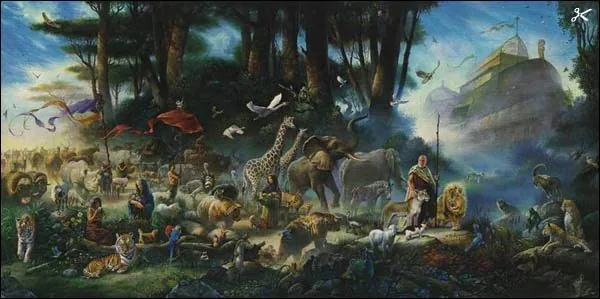
What is Multi-Covenantism?
Multi-covenantism recognizes that humanity is bound to God through multiple, simultaneous, and valid covenants. From the covenant with Adam to the universal covenant with Noah, this concept forms the foundation of all proper religion for mankind. It affirms that each community has its unique role and responsibility within a larger divine purpose.
Religious Federalism: Unity in Diversity
At the heart of this vision is Religious Federalism, a model of human organization. This structure sees humanity as a great tree with shared roots, from which unique and specific communities branch out. Each branch represents a covenantal path, contributing to the unity and diversity of mankind under God's guidance.
A Resource for Understanding Faith, Law, and Community
The Noahism Encyclopedia delves deeply into:
- National Identity: How different communities define themselves under God’s covenants.
- Religious Tolerance: Insights into coexistence and mutual respect between faiths.
- The Nature of Faith Communities: Understanding the spiritual and societal roles of Jewish and non-Jewish communities.
Rooted in the rich tapestry of Orthodox Jewish thought, this resource combines philosophical, halakhic, and mystical dimensions to explore these critical questions.
Discover the Foundations of Faith and Coexistence
Join us on a journey to explore the timeless wisdom of scripture and the Prophet's vision for a harmonious and covenantal world.
Printed Resources
Here are some of the finest quality publications for the scholar and layperson alike.
Quick Index
History
Law
|
Interfaith & Intrafaith
Resources
Encyclopedia |
WikiNoah
This purpose of the Encyclopedia is to create a resource for the greater Bnei Noach community and those interested in the Bnei Noach movement.
It is intended to contain the sum total of everything worthwhile to know about the Bnei Noach movement, its theology, history and resources. What it is and what is is not.
This is a project of the United Noachide Council, Inc. The articles, information, and links provided on this site do not represent official policies, procedures, or opinions of BnaiNoach.com or any of its operational units. The information on this site have come from a variety of sources, including speeches, articles, tracts, and other presentations, and they have been composed over a period of time, and many are of historic interest, Religion interest, and human affairs interest. Also, writer's inclusion on this site does not imply his full agreement with all of the articles. Each writer is responsible only for his own stated views. Many of the articles on this web site have been included only for the viewers use in the comparison of differing views and beliefs.
Encyclopedia
- Introduction to GodFearers
- Anyone who registers can make comments on "discussion" pages.
- By applying for approval it is possible to contribute to the main pages.
- Please read the Rules of participation.
- Also consider reading the GodFearers Tutorial
Noahidism: Reformist vs. Reconstructionist?
In general, please keep in mind the purpose of wikinoah. GodFearers is not supposed to be an encyclopedia of religions. It is supposed to be for 'Noahides':
- For those who hold that Noahidism is a religion by itself, a description of the practices, beliefs and history of that religion.
- For those who hold that Noahidism is the foundation and measuring stick of all proper religions, it should wikinoah provides a brief description of another faith, a description of which practices are not in line with Noahide law, and discussion of how the faith allows a person to live a rightoues life in compliance with Noahide teachings as handed down to us from Moses.
WikiNoah Vision
Here is the proposed basic structure for wikinoah (please comment on the talk page):
- 1. Jewish Law
- Definition of Noahides, Seven Laws, etc
- View of Maimonidies
- Expansion of the Seven Laws into 30, 66, etc. laws.
- Explanation of the various Rabbinic approaches to Noahide teachings
- 2. Noahide Law
- Wikipages in the form XYZ under Noahide Law
- Jewish Law for Jews on XYZ explained
- Jewish Law for Noahides on XYZ explained
- "Noahide" secular national law on XYZ explained
- Biographies and discussion of Noahide Leaders and Rabbis.
- Lists of resources online, in print, community services, etc.
- 3. Religious Law
- Define all major faiths
- Declare where they confirm Noahide Law
- Declare where they deviate from Noahide Law
- Wikipages in the form Noahide XYZ Religion which talk about followers of XYZ faith who also keep the Noahide Law.
- 4. Secular Law
- Define all major legal systems
- Declare where they confirm Noahide Law
- Declare where they deviate from Noahide Law (Wikipages in the form XYZ and Noahide Law)
- Talk about political lobbies for change in secular law where it deviates from Noahide standards.
- 5. History of 'Noahides'
- Biblical History, seventy nations, migration of peoples.
- Historical research: manuscripts, documents, reconstructions
- Mysticism: seventy nations, seventy attributes, try to identify attributes of national faiths, help noahides find themselves and their unique mission.
Obviously there will be disagreement between views, even within Jewish opinion, so I propose to use the method of categories and "icons" so that a visitor to wikinoah would immediately see which wikipage or part of wikipage relates to their point of view, while still leaving the open the option that they may learn from and draw from the experience of other Noahides who have taken different approaches.